
Renovate or Move? A Bay Area Homeowner’s Guide to Deciding
Should you renovate your Bay Area home or move? Compare remodeling costs, property taxes, mortgage rates, home prices, and other key factors.
The kitchen still has a wall around it, the third bedroom is doing duty as an office, and somebody in the house has had a listings tab open since spring. We sit down with homeowners in the middle of that argument most weeks of the year.
Sometimes the answer is to remodel. Sometimes it’s to sell, and we’ll say so. The price of the work decides less than people expect.
Key Takeaways
- A sale and purchase at Santa Clara County median prices runs about $175,000, almost all of it commissions and closing costs, and none of it buys you square footage.
- Buying resets your Proposition 13 assessment to the purchase price. Remodeling adds only the assessed value of the new construction.
- Proposition 19 lets owners 55 and older, severely disabled owners, and disaster victims carry their tax base to a replacement home anywhere in California, up to three times.
- The $250,000 and $500,000 capital gains exclusions haven’t been indexed since 1997, so long-held Bay Area homes regularly produce a taxable gain. Documented remodeling costs raise your basis and cut it down.
- The 30-year fixed averaged 6.69% in early August 2026, against a 4.4% average across outstanding U.S. mortgages. On a $1.6 million loan, a three-point gap costs roughly $3,568 a month.
- Zoning caps how much house your lot can hold, and the foundation decides whether a second story is possible. When the lot won’t carry what you need, moving is the right answer.
Is It Better to Remodel or Move in the Bay Area?
Neither wins by default. Renovating usually costs less, because selling and buying strips six figures out of your equity and resets both your property tax assessment and your cost basis. That advantage disappears when your lot can’t hold what you need, or when what’s wrong is the location.
Four questions settle it:
- What a sale and purchase permanently removes from the deal
- The property tax assessment and cost basis you’re sitting on now
- What your lot, your city’s code, and your foundation allow
- Whether the thing that’s wrong is the house or the address
The first two are arithmetic. The last two change minds.
What It Costs to Sell One Bay Area House and Buy Another
Commissions are the biggest line, and they’re now negotiated separately on each side of the deal. Transfer taxes, staging, pre-sale repairs, escrow, and the move add tens of thousands on top. On a $2 million sale rolling into a bigger house, the total runs about $175,000 before the new place does anything for you.
Real Estate Commissions After the 2024 MLS Rule Changes
Since August 17, 2024, offers of compensation can’t appear on the MLS, and a buyer has to sign a written agreement with their agent before touring a house. That agreement has to state in plain language that broker fees are negotiable and not set by law.
The fee didn’t go away. The negotiation split in two: what you pay your listing agent, and whether you offer anything toward the buyer’s agent. So we’re not going to print a percentage here. Anyone quoting you a flat five or six as “the standard” is describing a market that stopped existing two years ago.
Transfer Taxes by City in Santa Clara County
| Where the house sits | What’s collected at recording | On a $2,050,000 sale |
| Anywhere in the county | County documentary transfer tax, $0.55 per $500 | $2,255 |
| San José, Palo Alto, or Mountain View | City conveyance tax, $1.65 per $500, on top of the county tax | $9,020 combined |
| San José sales above $2,300,000 | Measure E, at 0.75%, 1%, or 1.5% by tier, applied to the full sale price | $18,750 on a $2.5M sale |
| Everywhere else in the county | County tax only | $2,255 |
San José, Palo Alto, and Mountain View are the only three cities in the county charging a conveyance tax on top of the county rate.
San José sellers have a second one to watch. Measure E’s exemption threshold rose to $2,300,000.01 on July 1, 2025 and re-indexes every five years. The rate applies to the entire sale price, not the portion above the line, so a house closing at $2,300,001 owes about $17,250 and a house closing a dollar lower owes nothing.
Selling Costs Homeowners Forget to Budget For
- Pre-sale repairs, plus whatever the buyer’s inspector turns up that you end up crediting
- Staging, close to standard here on anything that isn’t already photogenic
- Escrow, title, county recording, notary
- The move, plus storage or interim housing when the two closings don’t line up
- The first round of “we’ll just fix that one thing” in the house you just bought
On a $2,050,000 San José sale rolling into a $2.6 million purchase:
| What the move costs | Illustrative amount |
| Listing-side commission at 2.5% | $51,250 |
| Buyer-side compensation at 2.5%, if you offer it | $51,250 |
| County and San José city transfer tax | $9,020 |
| Staging, pre-sale repairs, escrow, and title | $25,000 |
| Moving and short-term storage | $8,000 |
| Loan, appraisal, inspections, and closing on the purchase | $30,000 |
| Consumed by the transaction itself | $174,520 |
Selling outside San José, Palo Alto, or Mountain View drops $6,765 off that transfer tax line, and the city portion is customarily split with the buyer anyway. Both commission figures are ours, picked so the arithmetic works rather than quoted as a market rate. Swap in what your agent actually charges; the total stays in six figures.
Buying a House Resets Your California Property Tax
Proposition 13 caps your property tax at 1% of assessed value plus voter-approved bond debt, and limits annual increases in that assessed value to 2%. Buying resets the assessment to what you paid. In Santa Clara County the composite rate runs about 1.15% to 1.25% depending on your tax rate area.
| Stay put | Buy at $2.6M | |
| Assessed value | ~$740,000 | $2,600,000 |
| Annual tax at 1.2% | ~$8,900 | ~$31,200 |
| Difference per year | ~$22,300 |
That first column assumes a 1998 purchase at $425,000 growing at the 2% cap ever since, which describes a lot of the houses we work in. Ten years of the gap runs at least $223,000, and more once both assessments have grown. Your own composite rate is printed on your tax bill, so run the two columns with your number rather than ours. For 2025-26 the main Sunnyvale rate area came in at 1.1671% and Santa Clara City’s at 1.1786%.
Proposition 19: Moving Without Losing Your Tax Base
If you’re 55 or older, severely and permanently disabled, or a victim of a wildfire or governor-declared natural disaster, Proposition 19 lets you carry your existing assessed value to a replacement home anywhere in California, up to three times. The replacement has to be purchased or newly built within two years of the sale.
Every one of these has to hold:
- You’re at least 55, severely and permanently disabled, or a disaster victim on the date the original home sells
- Both homes are your principal residence
- The replacement is bought or built within two years of the sale, in either order
- The replacement sits anywhere in California, since the old county-ordinance restriction is gone
- You’ve used the Proposition 19 transfer fewer than three times. A transfer you made years ago under Proposition 60, 90, or 110 doesn’t count against the three
Equal or lesser value means 100% of the original home’s full cash value if you buy before you sell, 105% within the first year after, and 110% in the second. Buy inside that and your base transfers untouched. Buy above it and the base still transfers, with the excess added on top. Here’s the Board of Equalization’s own worked example:
| Original home’s full cash value at sale | $400,000 |
| Its factored base year value | $100,000 |
| Replacement purchased in year one | $600,000 |
| 105% of the original value | $420,000 |
| Excess added to the base | $180,000 |
| Taxable value of the replacement home | $280,000 |
For a couple in their sixties looking at something smaller, this removes the largest financial argument for staying put. The claim gets filed with the assessor in the county where the replacement home sits, and it can’t run through escrow. Confirm your eligibility with that assessor before counting on it.
Does Remodeling Increase Property Taxes in California?
Sometimes, and only on the part that’s new. The assessor adds the market value of new construction to your assessment. Your existing house isn’t reappraised and your land isn’t touched, beyond the annual inflation adjustment of up to 2%. Ordinary repairs and maintenance don’t change the assessment at all.
| Generally adds assessed value | Generally doesn’t |
| New square footage: additions, second stories, ADUs | Roof replacement |
| Work extensive enough to count as substantially equivalent to new: major changes to framing, foundation, plumbing, or electrical that extend the building’s usable life | Replacing cabinets, counters, flooring, or windows |
| Fixtures replaced outright rather than repaired | Ordinary repair and maintenance |
Adding square footage always counts. Put on a room addition and the assessor puts a market value on the new space, adds it to what’s already on the roll, and sends a one-time supplemental bill for the difference. At $350,000 of assessed new construction and a 1.2% rate, that’s roughly $4,200 a year, against the $22,300 above.
Everything else stays where it was. Your existing house keeps its old assessed value, and so does your land. A remodel doesn’t reopen your Proposition 13 base.
Seismic retrofit components are excluded from assessment under Revenue and Taxation Code section 74.5, and so is construction that makes a home accessible to a severely and permanently disabled resident. Nobody volunteers either one, so ask.
The assessor decides case by case, and scope matters more than budget. A kitchen that stays a kitchen usually doesn’t move your assessment; take a house down to the studs and expect a second look.
Long-Held Bay Area Homes Trigger a Capital Gains Bill
The federal exclusion covers $250,000 of gain for a single filer and $500,000 for a couple filing jointly, as long as you owned and lived in the home for two of the five years before the sale. Congress set those figures in 1997 and has never indexed them to inflation.
Why Long-Held Bay Area Homes Pass the $500,000 Exclusion
| Selling a median county house bought in 1998 | |
| Sale price | $2,050,000 |
| Selling costs at 5.5% | −$112,750 |
| Original purchase price | −$425,000 |
| Documented capital improvements | −$150,000 |
| Gain | $1,362,250 |
| Exclusion, married filing jointly | −$500,000 |
| Taxable gain | $862,250 |
Two bills land on that $862,250. Federal long-term capital gains rates plus the 3.8% net investment income tax, then California, which conforms to the federal exclusion but taxes anything above it as ordinary income at rates reaching 13.3%.
The total depends on your bracket. For a couple in the top California bracket, a gain that size runs close to $320,000. The state also withholds 3⅓% of the sale price at closing on Form 593, a prepayment against that bill rather than the bill itself.
Remodeling Costs Add to Your Cost Basis
Improvements raise your basis. Repairs don’t. Every dollar of basis is a dollar of gain that never gets taxed, which makes a remodel one of the few large expenses that reduces a tax bill decades later.
Look at the $150,000 improvements line in the table. For that same couple, documenting it keeps roughly $55,000 away from the taxable gain.
That’s the unglamorous case for pulled permits, signed contracts, and itemized invoices. IRS Publication 523 defines what qualifies. Keep the records; you’ll want them twenty years out.
We build houses and don’t prepare tax returns, so take these numbers to someone who does.
Mortgage Rate Lock-In and What Moving Adds to Your Payment
The 30-year fixed averaged 6.69% the week of August 6, 2026. The average rate across outstanding U.S. mortgages sat at 4.4% at the end of the first quarter, with just under half of them below 4%. Trading a 3% loan for a 6.69% one is a monthly cost that runs for as long as you hold the new mortgage.
The FHFA has measured what that does to behavior: each percentage point market rates run above a homeowner’s original rate cuts the probability of that homeowner selling by 18.1%.
| Your current rate | Monthly P&I | At 6.69% | Difference | Over 10 years |
| 3.00% | $6,746 | $10,314 | +$3,568 | +$428,000 |
| 4.00% | $7,639 | $10,314 | +$2,675 | +$321,000 |
| 5.00% | $8,589 | $10,314 | +$1,725 | +$207,000 |
That’s a $1.6 million loan, or 20% down on a $2 million house, principal and interest only.
If you bought or refinanced in the last three years, your rate sits close enough to market that this whole factor mostly disappears. So does one of the stronger arguments for staying. Read the bottom row first.
A second-position loan or HELOC sits behind the first mortgage and leaves that rate alone, which at a three-point gap usually beats a cash-out refinance. Paying for the work doesn’t mean giving up the loan.
Will Your Lot and City Code Allow the Remodel You Want?
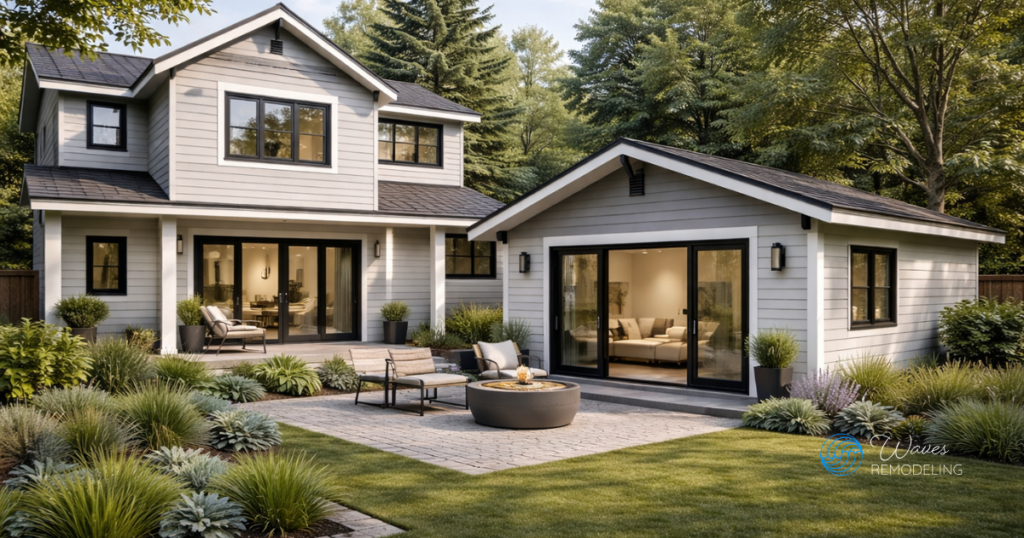
Your lot decides this before your budget does. Zoning caps how much house can stand on it, and what’s under the floor decides whether a second story is possible at all. Both answers exist before you hire anyone, and both take about a week to get.
- Floor area ratio. Total floor area measured against lot size, and usually the first ceiling you hit.
- Lot coverage. How much of the lot the footprint can occupy, which caps how far you can spread out at grade.
- Setbacks, daylight plane, and height. What shapes a second story once you have the square footage to build one.
- What’s under the house. Foundation and framing capacity, which decides whether a second story is a drawing problem or a structural one.
In San José, a house pushing past 0.45 FAR needs a Single-Family House Permit approved by the Director of Planning, and so does any house on the city’s Historic Resources Inventory. Cities draw the lines in different places, and that filing is part of what we handle on a San José renovation.
Sunnyvale gives you more room and more process. Under Ordinance 3258-26, effective August 27, 2026, the cap in the R-0, R-1, and R-2 districts is 60% FAR with lot coverage limited to 50%, replacing a ceiling of 45% FAR or 3,600 square feet. Push past the FAR and the plans go to the Planning Commission at a public hearing. Any second-story addition needs a design review permit there regardless of size.
If the lot won’t carry what you need, no budget fixes that, and moving is the right answer. We’d rather say so at feasibility than after you’ve paid for drawings, so get these numbers before you fall in love with a floor plan.
Bay Area Home Prices and Buyer Competition in 2026
Santa Clara County single-family homes sold at a median $2,050,000 in May 2026, with two thirds closing above list and 1.4 months of supply on the market. San Mateo County ran tighter still. Whatever you buy here, you’ll be bidding for it.
| Market | Median sale price | Days on market | Sold above list |
| Santa Clara County | $2,050,000 | 14 | 66% |
| San Mateo County | $2,225,000 | 13 | 69% |
| San José | $1,650,000 | 16 | 67% |
| Santa Clara | $1,900,000 | 13 | 70% |
| Sunnyvale | $2,781,750 | 9 | 77% |
| Redwood City | $2,475,000 | 9 | 81% |
| Palo Alto | $4,300,000 | 11 | 77% |
Redfin, single-family homes, May 2026.
Read the San José and Sunnyvale rows together. Trading a median San José house for a median Sunnyvale one is $1.13 million more house before a dollar of transaction cost, and it arrives with a reset assessment and today’s rate attached. Neither a second story on the San José house nor a full renovation in Sunnyvale comes close to that gap.
The above-list percentages tell you which houses draw the crowd. Finished ones collect the offers, and the houses needing work sit, take a price cut, and sell to somebody planning to renovate anyway. Your realistic alternative to remodeling is outbidding that crowd for a finished house, or paying a premium for someone else’s project.
Alternatives to a Full Remodel or a Move
The question gets framed as stay-and-gut or sell-and-leave, and most of the projects we take on land somewhere between the two. Fixing the room that’s actually the problem, adding space instead of reworking it, or building in stages all cost less than either extreme.
- Fix the room that’s the problem. Most “we’ve outgrown this house” turns out to be one kitchen and one wall.
- Build it in stages. Kitchen this year, primary bath in two. You keep living there and you pay for it in pieces.
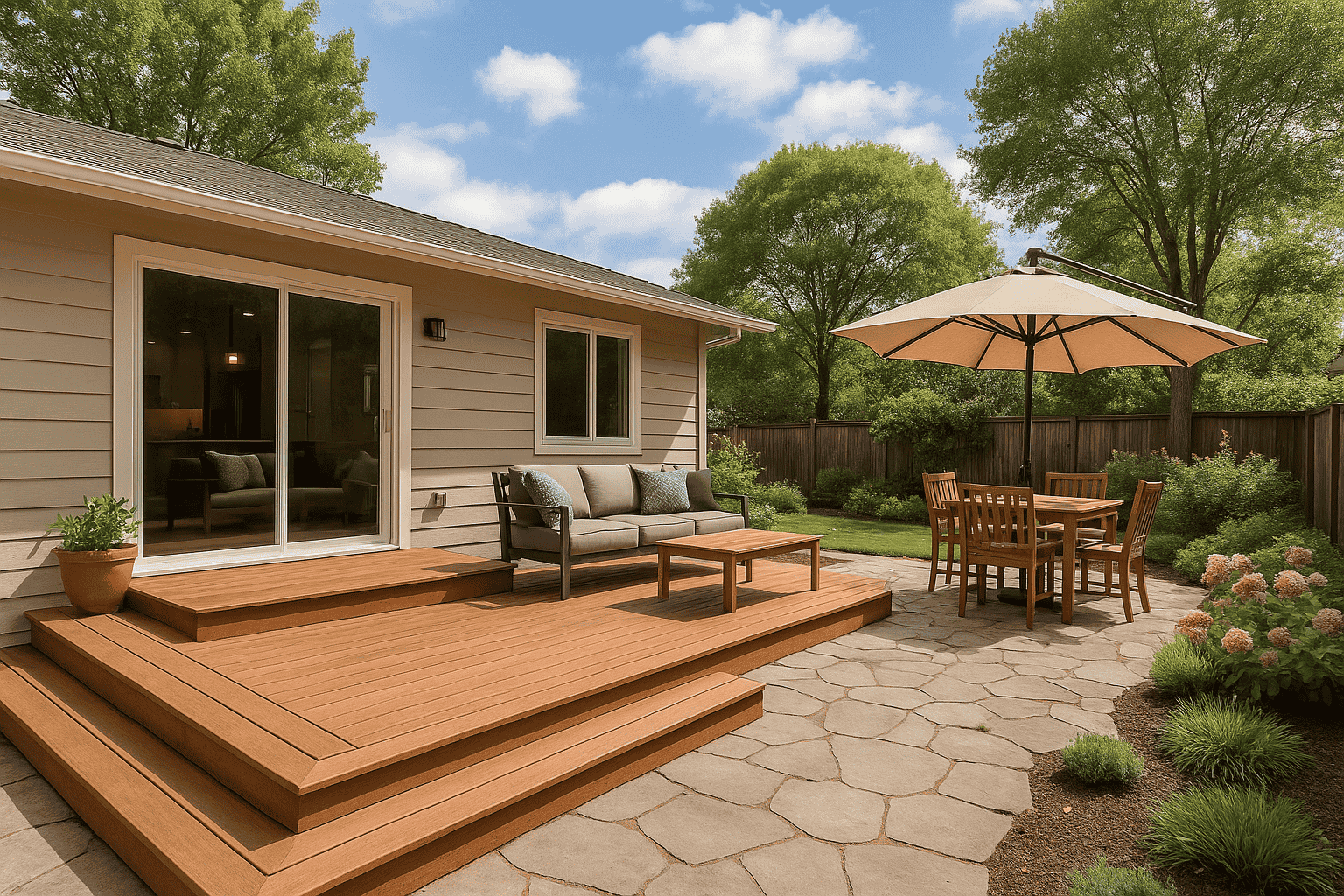
- Add outdoor room instead of indoor room. A deck or covered patio costs less per square foot than conditioned space, an open deck usually doesn’t count against floor area the way enclosed space does, and the weather here lets you use it most of the year.
- Put up an ADU. A parent with their own front door, an office that isn’t the guest room, or rental income, none of which requires touching the main house.
- Do the whole thing. Sometimes the honest answer is the full renovation, and phasing it only makes it cost more.
When Moving Makes More Sense Than Remodeling
Moving wins when the problem is something construction can’t reach, or when the numbers that favor staying don’t apply to you. Six situations come up often enough to name.
- The location is the problem. School district, commute, the street itself — no renovation changes an address.
- The lot won’t carry it. Floor area ratio, setbacks, or lot coverage cap you below what your family needs, and a variance isn’t realistic.
- You’re 55 or older and downsizing. Proposition 19 takes the property tax penalty off the table, so a smaller house at a lower price can cost less to own than staying put does.
- Your gain sits under the exclusion. Bought within the last decade, or gain below $250,000 single and $500,000 joint, and the capital gains argument for staying mostly evaporates.
- Your rate is already near market. A mortgage originated since 2023 has little to lose against today’s 6.69%.
- The structure is past economic repair. Foundation failure, widespread framing damage, or a rehab extensive enough that the assessor would treat it as new construction anyway. Price it against buying and against a teardown before you commit.
We’ve talked homeowners out of remodels for every one of these. The last is the one that stings, because by the time a foundation is failing you’ve usually already spent money finding out.
Reasons Bay Area Homeowners Stay and Renovate
Every year you’ve held the house makes the assessment and the cost basis worth more to you, and neither one follows you to a new address. The case for staying compounds.
If your mortgage sits two points or more below today’s rate, that gap costs thousands a month to give up. Own long enough and your assessed value and your cost basis are both working in your favor, and a sale resets both to zero. The foundation is level and the framing is sound, which is the expensive half of any house and you already own it. You know exactly what’s wrong with the place, so the scope is definable and so is the budget.
Then there’s the part no spreadsheet holds. The neighborhood is what you actually bought: the schools, the commute, the people two doors down. And the alternative is bidding against everyone else for a finished house in a market where most sales close over asking.
How to Compare Remodeling and Moving Costs for Your House
Five numbers settle this, and you can gather all of them in about two weeks without spending anything. Two come from a real estate agent, one from a contractor, and two from your own tax bill.
- Get a real number on what your house sells for today. A listing agent’s comparative market analysis costs nothing and beats any automated estimate.
- Get a real scope and price on the remodel. Not a per-square-foot range off the internet. A design-build firm should hand you drawings, a written scope, and a price for a whole-house renovation before you commit to construction.
- Pull your assessed value and estimate the reset. It’s printed on your tax bill. Multiply the price of the house you’d buy by roughly 1.2% and set the two side by side.
- Estimate the gain. Sale price, less selling costs, less what you paid, less documented improvements. Compare what’s left against $250,000 or $500,000.
- Compare monthly, not just total. Total outlay favors staying almost every time. The monthly comparison is where moving occasionally wins, and it’s the step people skip.
If steps one and two land within about 20% of each other, money stopped being the deciding factor. What’s left is whether the lot can produce the house you want, and whether the address is the part you’re unhappy with.
Renovating vs. Moving: Frequently Asked Questions
Depends on scope. For a kitchen or a single bathroom, most families stay and live around it. A whole-house renovation with the plumbing and electrical opened up goes easier on everyone if you’re out, and that rent belongs in the budget as a line item rather than a surprise. We’ll tell you which one yours is before you sign anything.
A whole-house renovation runs three to six months of construction for us, with city plan review ahead of that. Selling and buying can close faster on paper, but the search is the variable nobody can schedule, and plenty of buyers here spend a year losing offers. Neither path is quick. The renovation is the one with a calendar you can see.
It can. California requires you to disclose what you know about the house when you sell, and unpermitted square footage often doesn’t get counted by the appraiser, which changes what a lender will lend against the property. Permitting it after the fact is possible, though it sometimes means opening walls that are already finished. Better to find out now than in escrow.
A remodel for resale is a different project from a remodel for living in. Scope stays tighter and material choices stay neutral. Large renovations rarely return their full cost at sale. Watch the two-of-five-year rule on the capital gains exclusion as well, since it turns on how long the house has been your primary residence, not on when you renovated.
Usually, and the call belongs before construction rather than after. Replacement cost goes up when you add square footage or upgrade systems, and most carriers want to know about work in progress. If you’re moving out during the build, ask specifically how your policy treats a vacant house.
Common enough to plan for before you list. The options are selling first and renting, buying first and carrying both, or writing a contingency a seller will actually accept in a market where most homes draw multiple offers. If you’re counting on a Proposition 19 base year transfer, the replacement purchase has to happen within two years of the sale.
Love Your Location but Not Your Current Home?
Moving is not always the only way to get more space, a better layout, or a home that fits the way your family lives today. A thoughtful renovation can solve the problems that are making you consider leaving.
At Waves Remodeling, we help Bay Area homeowners evaluate what is possible, plan the right scope, and manage design, permits, and construction from start to finish.
Whole Home
Remodeling
Layout & Space
Planning
Bay Area Remodeling
Expertise
More Remodeling Insights

General Contractor vs. Subcontractor
You sign one contract with a general contractor. That firm then signs its own contracts with an electrician, a plumber, a tile setter, and…
Read More
What Is a General Contractor?
A general contractor is the licensed company that contracts for your entire project, hires and schedules the trades, pulls the permits, and answers for…
Read More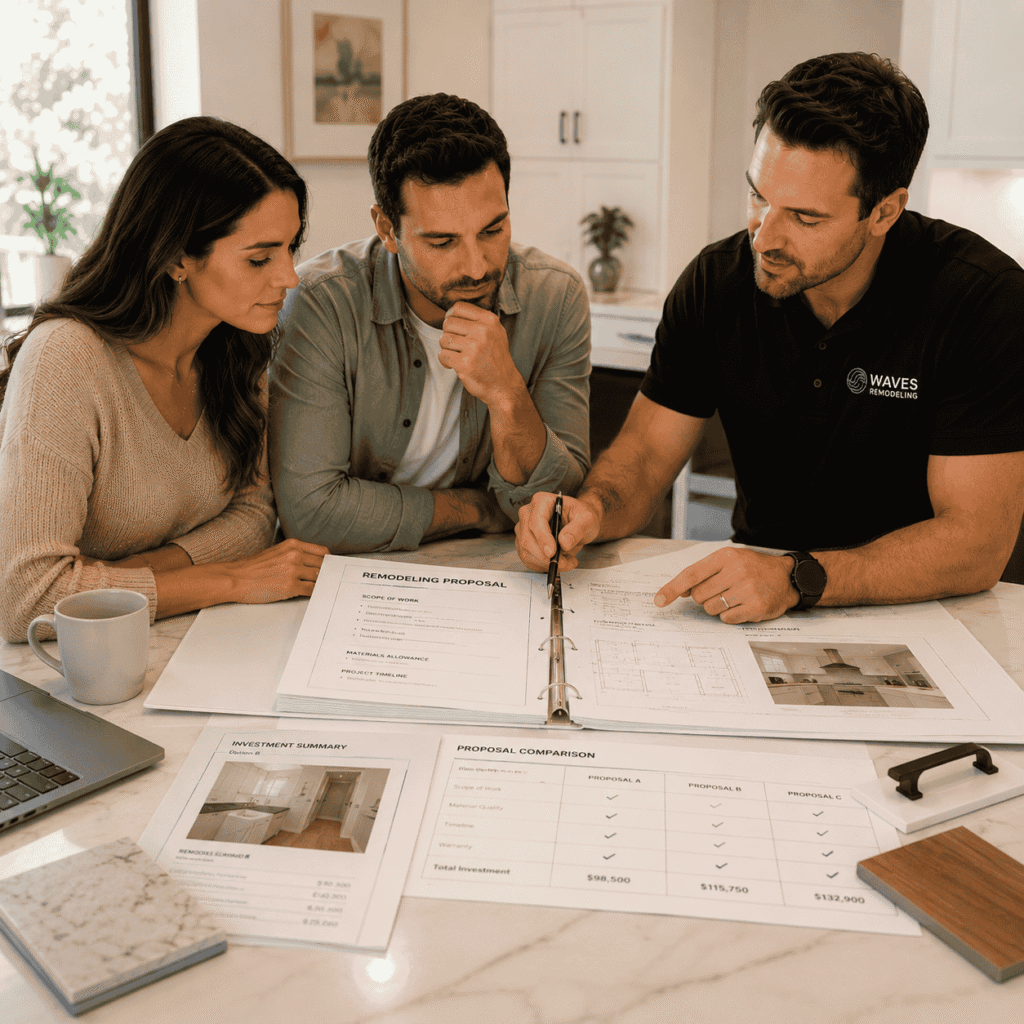
Remodeling Mistakes That Cost Bay Area Homeowners Thousands
Remodeling your home is a major investment, and the decisions you make before construction begins can have a lasting impact on the project's success.
Read More