
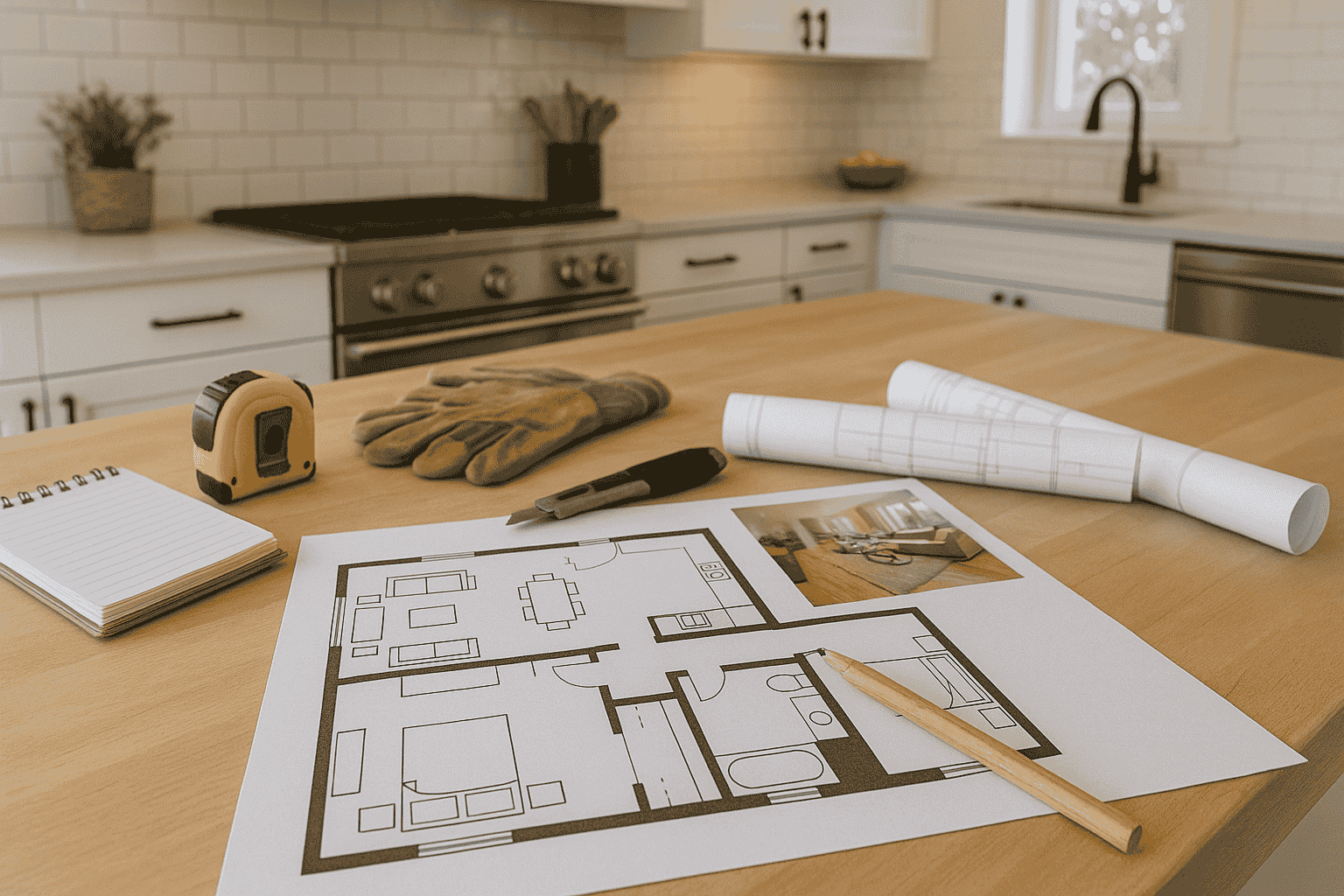
Design-Build vs. General Contractor: Which Is Right for Your Bay Area Remodel?
The choice comes down to scope and how much of the project management you want to own. Design-build puts one team in charge of everything from drawings to drywall. A general contractor builds from…
The choice comes down to scope and how much of the project management you want to own. Design-build puts one team in charge of everything from drawings to drywall. A general contractor builds from plans you’ve already gotten elsewhere. Both work — but they fit different projects, and picking the wrong one can cost you months and thousands of dollars in miscommunication.
Key Takeaways
- A design-build firm handles design and construction under one contract. A general contractor builds from plans someone else drew.
- Design-build gives you a single point of contact and usually tighter schedule control. The tradeoff: you can’t competitively bid the construction to multiple builders.
- A general contractor works well when you already have finished plans from an architect you trust, or when the project is straightforward enough that a separate design phase isn’t needed.
- A 2018 study of 212 U.S. construction projects, updating a landmark 1998 benchmark, found that design-build delivery runs 102% faster from design through completion than the traditional design-bid-build model. That data spans all building types, not residential remodels specifically.
- We operate as a licensed general contractor with an in-house design and 3D rendering team, so our clients get a single team handling everything, within the GC model.
How Each Model Works
What Is a Design-Build Firm?
A design-build firm employs (or subcontracts) both the design professionals and the construction crew. You sign one contract, work with one team, and have one entity accountable for the finished product.
The process starts in a design phase where architects or designers develop plans alongside the firm’s builders. Because the people who’ll construct the project sit in on the design meetings, they can flag cost or feasibility problems before drawings get finalized. That feedback loop keeps budgets tighter on complex jobs.
You deal with one project manager. Decisions about materials, layout changes, and permit questions run through the same organization. When something goes wrong on site, there’s no argument about whether it’s a “design problem” or a “construction problem” because the same firm owns both.
You’re also locked into that firm’s construction pricing. There’s no bidding phase where you compare three or four builders on the same set of plans. If transparency on cost matters, ask any design-build firm whether they work on an open-book or fixed-price basis, and how they handle change orders.

What Is a General Contractor?
A general contractor is a licensed builder who manages the construction side of your remodel. Their job begins after you already have a finished set of plans, typically prepared by an independent architect or designer you’ve hired separately.
You run two separate hiring processes. First, work with a designer or architect to develop drawings, material specs, and a permit-ready plan set. Once those plans are done, take them to one or more GCs and ask for bids. Pick the GC, sign a construction contract, and the build begins.
The GC hires and manages subcontractors (electricians, plumbers, framers, tile setters), schedules inspections, and keeps the job moving against the plans. Your architect may or may not stay involved during construction for periodic site visits, depending on your agreement with them.
The advantage is control: you choose your own designer, you bid the construction to multiple contractors, and you compare pricing line by line. The cost is coordination. If the builder runs into a structural surprise that changes the design, you’re the one relaying questions between your architect and your GC. And if the finished product doesn’t match the design intent, sorting out responsibility gets complicated when two separate firms are involved.
Side-by-Side Comparison: Design-Build vs. General Contractor
| Criteria | Design-Build Firm | General Contractor |
| Team structure | One firm employs design and construction staff under a single contract | You hire a separate designer/architect, then a separate GC |
| Contract type | Single contract covering design through construction | Two or more contracts: one for design, one for construction |
| Who manages the budget | The firm tracks costs across both phases; design decisions get priced in real time | You manage the budget across separate vendors; construction cost isn’t confirmed until plans are bid out |
| Timeline predictability | Design and permitting can overlap with early construction prep, compressing the schedule | Sequential: design must finish before construction bidding can start |
| Who you can choose | One firm for everything; limited ability to bid the build separately | You pick your own designer and can bid the construction to multiple GCs |
| Best for | Complex or large-scope projects with many moving parts | Simpler projects, or jobs where you already have finished plans and want competitive pricing |
When a Design-Build Firm Makes Sense

Design-build earns its keep when the project is complex enough that the gap between designer and builder creates real risk.
Projects That Favor Design-Build
- Whole-home renovations where structural, electrical, plumbing, and finish work all overlap and design decisions shift as existing conditions get exposed
- Room additions and second stories that need architectural, structural engineering, and construction to stay in sync through permitting
- ADU builds with city permitting, zoning setbacks, and utility connections that require tight coordination between the plan set and the build team
- Remodels in older Bay Area homes (pre-1978 especially) where opening walls regularly turns up knob-and-tube wiring, undersized panels, or dry rot that forces design changes mid-project
In each case, the value is the same: the person who drew the detail is the one building it, so mid-project surprises don’t stall in a chain of emails between your architect and a builder who’s never met them.
What the Data Shows
In 1998, the Construction Industry Institute benchmarked design-build against other delivery methods and found it outperformed on cost, schedule, and speed. A 2018 update funded by the Charles Pankow Foundation, conducted through the University of Colorado Boulder, retested those findings with a fresh sample of 212 projects completed between 2008 and 2013 across the U.S.
The results held:
- 102% faster from design through final completion than design-bid-build
- 36% faster during the construction phase alone
- 3.8% less cost growth compared to design-bid-build
A fair caveat: that study covered office buildings, industrial facilities, high-tech buildings, and multi-story housing. It didn’t isolate single-family residential remodels. Still, the reasons design-build performed better (earlier builder involvement, fewer handoffs, tighter feedback between designers and builders) apply to a home remodeling project just as directly as they do to a 200,000-square-foot office.
When a General Contractor Makes Sense
The GC model isn’t outdated. For the right project, it’s the smarter choice.
Projects That Favor a General Contractor
- You already have finished construction documents from an architect you trust and you want to bid the build competitively
- Cosmetic or single-trade projects like a bathroom refresh where the layout stays put, a deck from a standard plan, or a cabinet reface with no structural changes
- You’ve been through a remodel before and you’re comfortable managing the gap between designer and builder yourself
- Budget transparency is the priority and you want line-by-line pricing from two or three competing GCs on the same plan set
Picking the Right General Contractor
Whichever model you choose, vetting the contractor matters more than the label. We’ve written a separate guide on how to choose the right contractor in the Bay Area that covers license verification, reference checks, and the warning signs of a bad contractor worth watching for before you sign anything.
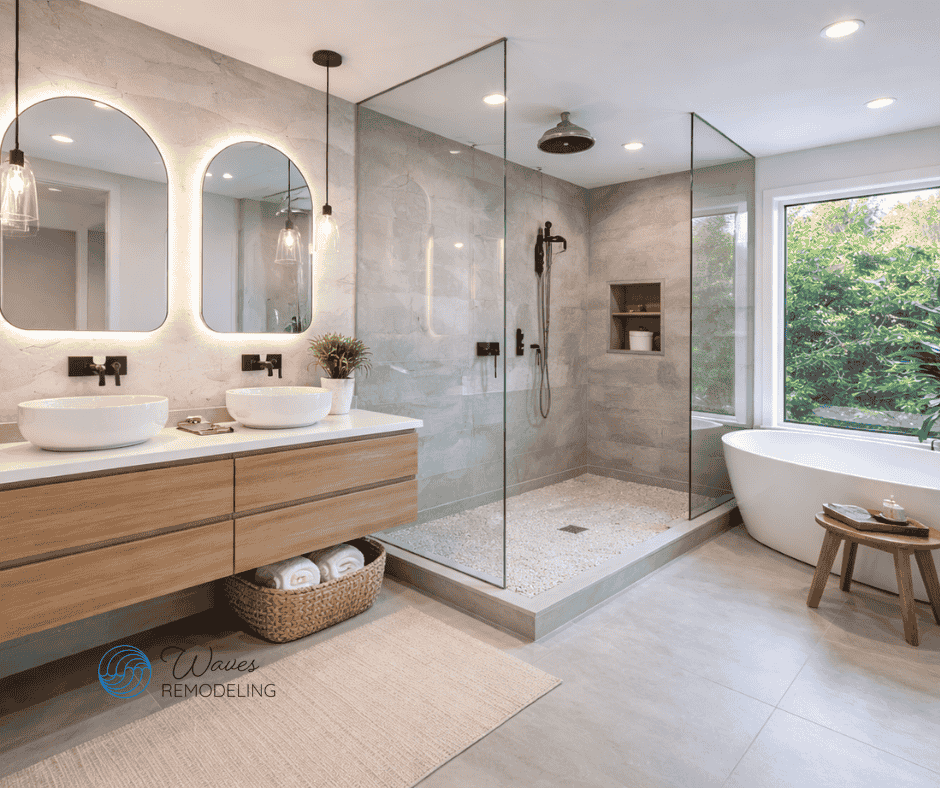
Where Waves Remodeling Fits
We’re a licensed general contractor (CSLB #1068557) with an in-house design team and 3D rendering. Technically, we operate under the GC model. Practically, our clients get what they’d expect from a design-build firm: one team from first render to final walkthrough, design through permitting through construction, with no outside architect to coordinate. Call us at (408) 637-6142 or book a free estimate, and we’ll tell you straight whether our model fits your project.
Frequently Asked Questions
What Is Design-Bid-Build?
Design-bid-build is the traditional three-step process: you hire an architect to draw plans, bid those plans out to general contractors, then pick a GC to build. It gives you the most control over who designs and who builds, but it also means you’re managing the gap between them. Design-build collapses those steps into one contract with one firm.
Do I Need an Architect if I Hire a Design-Build Firm?
Usually not. Most design-build firms have in-house designers or architects who create the plans as part of the contract. If you’ve already paid an architect for drawings you’re happy with, a design-build firm may not be the right fit, since you’d be paying for design work twice.
Who Handles Permits in Each Model?
In a design-build setup, the firm pulls permits as part of the scope. With a general contractor, it depends on your agreement: some GCs handle permitting, others expect you or your architect to submit. In Bay Area cities like San Jose and San Francisco, permitting can take 8 to 12 weeks, so clarify this before you sign.
What Should I Ask Before Signing With a Design-Build Firm or a GC?
Ask who manages day-to-day communication, how change orders are priced and approved, and whether the contract is fixed-price or cost-plus. For design-build, ask to see the design fee structure. For a GC, ask how they handle design conflicts that come up during construction. Ask both for their CSLB license number and verify it at cslb.ca.gov.
Can I Switch From One Model to the Other After Starting?
You can, but it’s expensive. If you’ve paid an architect for finished plans and then hire a design-build firm, you may end up paying for overlapping design work. Going the other direction (design-build to a separate GC) usually means starting the bidding process from scratch. The cheaper move is picking the right model before you sign anything.
Choose the Right Remodeling Approach
Not Sure Which Remodeling Approach Is Right for Your Project?
Choosing between a Design-Build company and a general contractor can significantly impact your remodeling experience, timeline, and budget.
At Waves Remodeling, we guide Bay Area homeowners through every stage of the remodeling process—from planning and design to construction and final walkthrough—so you can move forward with confidence.
More Remodeling Insights

General Contractor vs. Subcontractor
You sign one contract with a general contractor. That firm then signs its own contracts with an electrician, a plumber, a tile setter, and…
Read More
What Is a General Contractor?
A general contractor is the licensed company that contracts for your entire project, hires and schedules the trades, pulls the permits, and answers for…
Read More
Renovate or Move? A Bay Area Homeowner’s Guide to Deciding
Should you renovate your Bay Area home or move? Compare remodeling costs, property taxes, mortgage rates, home prices, and other key factors.
Read More