
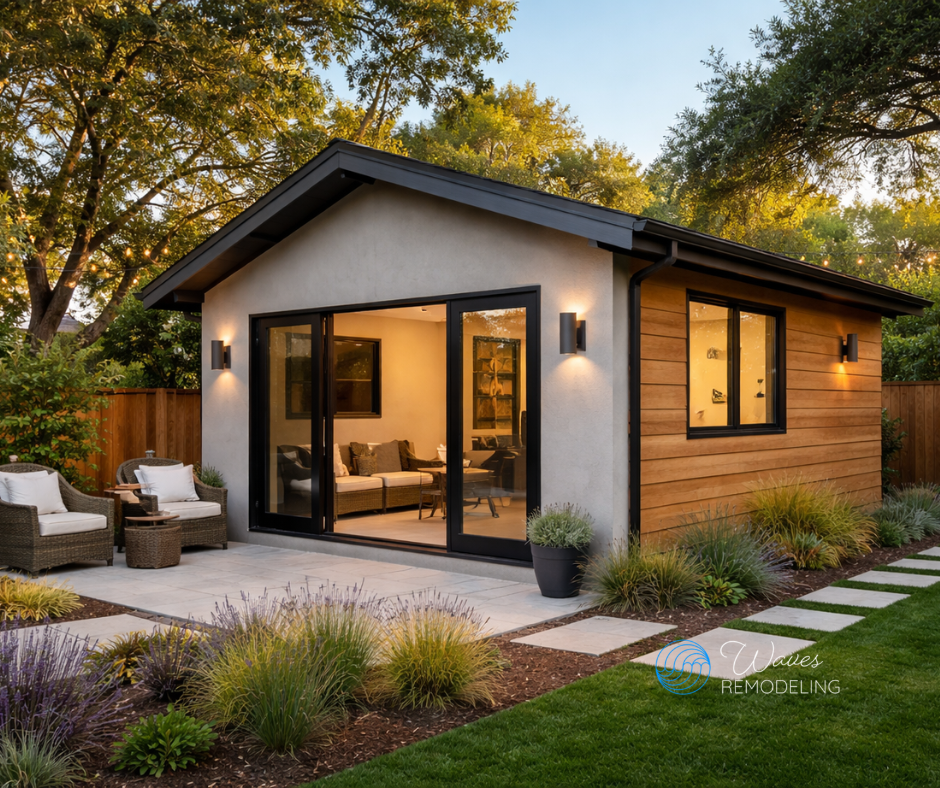
What Is an ADU? A Bay Area Homeowner’s Guide to Accessory Dwelling Units
An accessory dwelling unit (ADU) is a second, self-contained home on the same lot as your main house, with its own kitchen, bathroom, and entrance.
Most people land here for one of two reasons: a stretch of unused backyard that could be earning rent, or a family member who needs their own space. We build these across the Bay Area, so here’s the plain version, minus the brochure gloss.
You’ll learn:
- The one feature that turns a spare room into a legal ADU
- Which of the four types of ADUs skips the most cost to build
- Why owners build them for far more than rental income
- How to tell if your lot clears California’s statewide bar
- The parking, height, and tax rules that catch owners off guard
What Does ADU Stand For?
ADU is short for accessory dwelling unit. What earns a structure that label is functional, not architectural: a full, standalone home that shares a lot with a main house, one that’s already built or still in the plans.
Four features separate an ADU from a converted den or a nice shed:
- A kitchen you can cook full meals in
- A bathroom
- A place to sleep
- Its own entrance, so nobody walks through the main house to get in
The kitchen is the dividing line the code draws. A den with a bed is still a den. Add a stove, a sink, and counter space, and you’ve built a dwelling unit.
What Shapes Can an ADU Take?
An ADU is a category of home, not a fixed floor plan. One person’s ADU is a small cottage at the back of the lot. Their neighbor’s is the old two-car garage with the doors sealed and a bedroom where the cars used to park. Same legal label, different builds.
You’ll hear it called a granny flat, an in-law unit, a casita, or a second unit, depending on who’s talking. All one category. The basement conversion that’s common back east barely shows up around here, since most Bay Area homes sit on slabs without one.
Zoning judges the unit by the job it does, not its shape: secondary to the main house, smaller than it, on a residential lot. Size can start small. The state doesn’t force an ADU to be big, so a 400-square-foot studio counts every bit as much as a two-bedroom.
What Are the Four Main Types of ADUs?
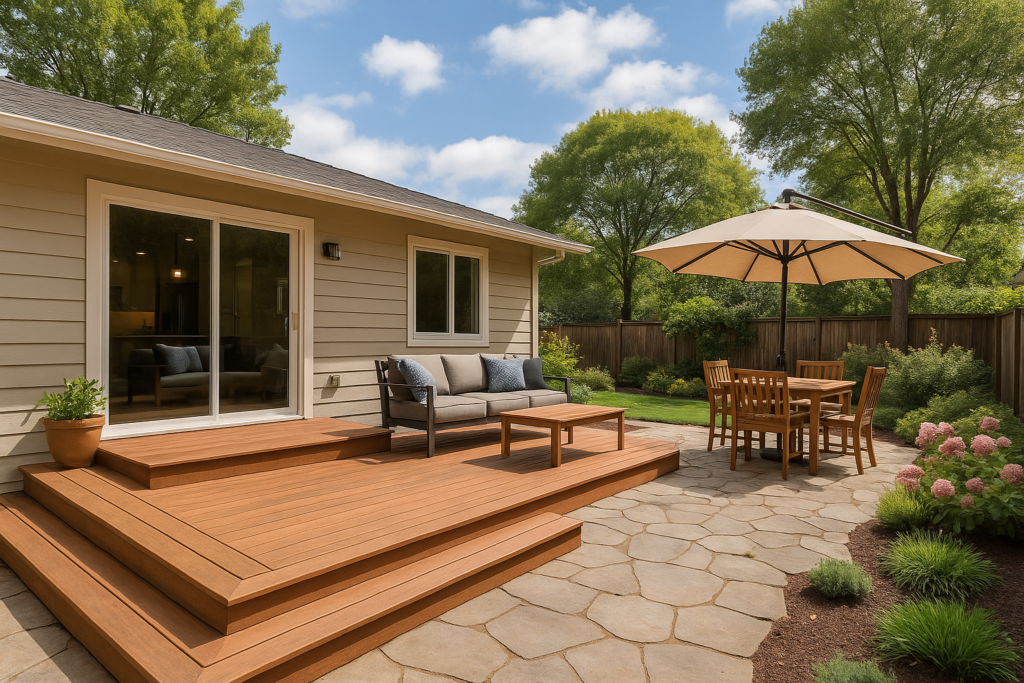
Nearly everything we build sorts into four types of ADUs, and the one that fits comes down to your lot and your budget.
| Type | What it is | Tends to fit when |
| Detached ADU | A freestanding unit in the yard, the classic backyard cottage or granny flat | You’ve got open ground and want full separation |
| Attached ADU | A new unit built onto the main house, sharing one wall | The yard is tight, but the house has a side to grow into |
| Garage conversion | An existing garage rebuilt into living space | You’ll trade parking for square footage that’s already there |
| Junior ADU (JADU) | Up to 500 sq ft carved out inside the existing home | You want the lightest, cheapest route and can spare an interior room |
A detached ADU buys the most privacy and usually pulls the highest rent, since no wall or ceiling is shared. State standards commonly allow up to 1,200 square feet for a freestanding unit. It also carries the biggest bill, because you start with a new slab and run water, sewer, and power out to it.
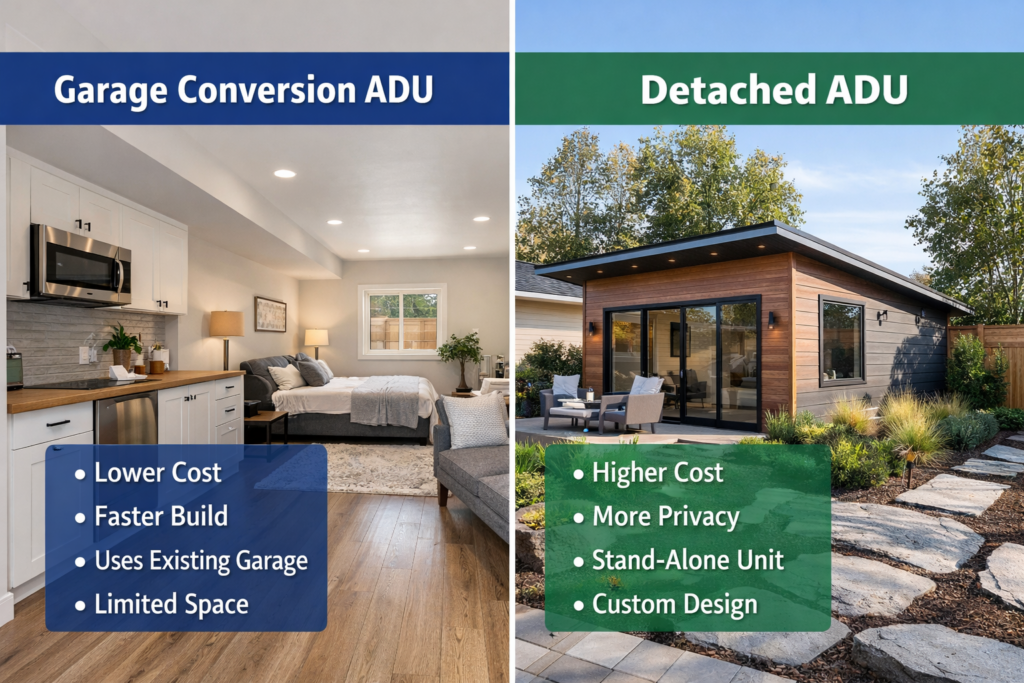
Attached units and garage conversions save money by leaning on what’s already standing. A garage conversion skips the new slab and the roof. And once the garage becomes living space, California no longer makes you rebuild the parking you gave up, which knocks out a sticking point that used to kill these projects.
A JADU plays by its own rules. Capped at 500 square feet and built inside the existing walls of the house, it can share a bathroom with the main home, which keeps the cost down. In trade for the small size, it carries the lightest permitting load of the four. You can see a range of finished builds among our ADU projects in San Jose.
What’s an ADU Good For?
➥ The uses split a few ways. Rental income is the loudest, since a backyard unit can offset a real chunk of a Bay Area mortgage, and that math is why so much new ADU housing is going up across Santa Clara County.
➥ Family is close behind. A parent who wants to stay near but keep their own front door. A grown kid saving for a place. In-laws for part of the year. Everyone stays within reach, and nobody shares a kitchen.
➥ Then there’s workspace and resale. A real office beats the corner of a bedroom, and an ADU adds value to a property, though how much rides on build quality and the block it sits on. The quiet advantage is flexibility over time: the unit that houses your mother this decade turns into a rental the next, or an office the one after that. You aren’t locked into a single use the day it’s finished.
Is My Lot Eligible for an ADU?
Short answer: probably. California allows ADUs on lots zoned single-family or multifamily residential, as long as a home already stands there or is in the plans. That statewide baseline is why building one got dramatically easier over the past several years.
Your lot is a strong candidate when a few pieces line up:
- It’s zoned for single-family or multifamily residential use
- A primary home exists on it or is planned
- There’s room for a unit within the 4-foot side and rear setbacks the state allows
Cities can layer their own objective standards on top, but they can’t zone around the basics. A local rule on lot coverage or floor-area ratio can’t block the 800-square-foot ADU the state protects, and a homeowners association can’t ban a unit California law permits.
Approval itself tends to be friendlier than owners expect, because these units get signed off ministerially, with no discretionary hearing where a neighbor can talk the city out of your project. What that approval takes, from submittal to stamped plans, sits in our rundown of ADU permits in California.
The rules also allow more than one unit. On a single-family lot, the state generally lets you combine a JADU inside the house, a conversion ADU, and a detached unit out back. And if your property already carries an unpermitted garage conversion or in-law unit from years back, there’s usually a way to legalize it and bring it up to code.
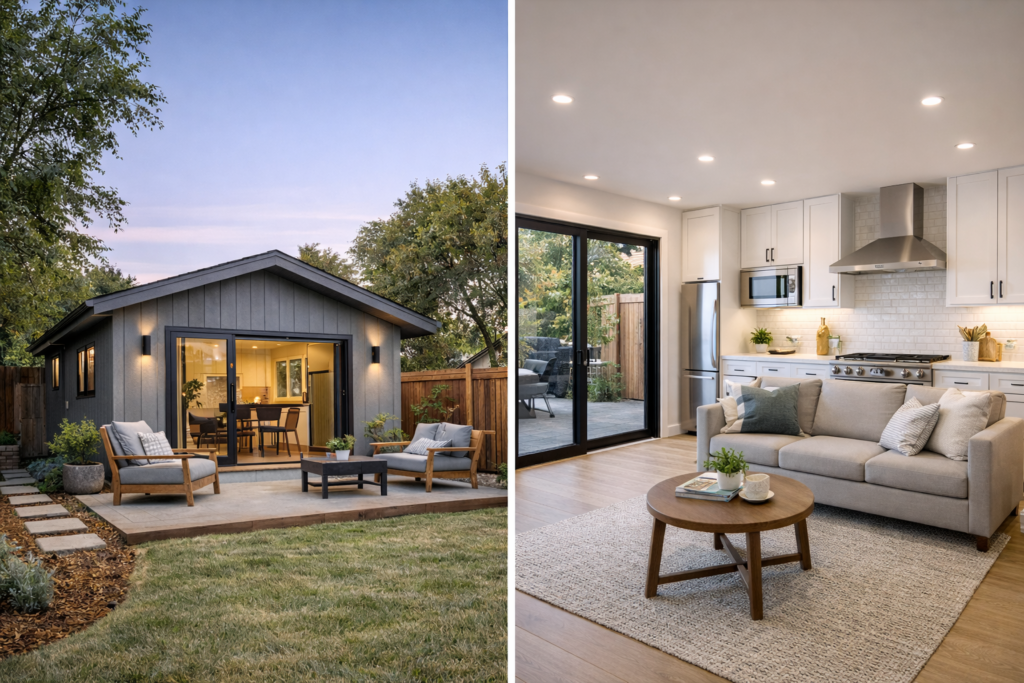
Eligibility and approval aren’t the same question, and it helps to keep them apart. Being allowed a unit is zoning. Getting one built is a timeline of plans, fees, and inspections that lands on top of it. A handful of Bay Area cities, San Jose included, keep pre-approved plan sets that shave weeks off the front end.
How ADU Construction Runs, First Render to Final Walk?
Since we design and build under one roof, ADU construction and the drawings never leave the same team. Our full guide on how to build an ADU lays out every step; the short version starts on the lot, where we measure, check setbacks, and work out which of the four types it can carry. Then you see the unit in full 3D before anyone orders a cabinet or pours a slab, so the moment to move a wall or swap the tile is now, on a screen, not later in framing.
From there the job runs through permitting, the slab or the conversion work, framing, systems, finishes, and a final walkthrough where nothing counts as done until you’ve signed off. One project manager carries it start to finish, so you’ve got a single name and number the whole way.
Timelines depend on the type, with a garage conversion wrapping faster than a ground-up detached unit, and city plan review in front of both. If you’re past the reading stage, our ADU services page lays out how a build goes from first sketch to handoff.
Thinking About an ADU on Your Lot?
If you’re trying to work out what your lot can take, and which of the four makes sense for it, we’ll come look.
Licensed & Insured · CSLB #1068557 · Serving San Jose & the Greater Bay Area
Call us at (408) 637-6142 or book online. The first visit and estimate cost nothing, and we’ll give you straight numbers on both cost and time.
Frequently Asked Questions About ADUs
Can I rent out both my house and the ADU?
Yes. California dropped the owner-occupancy requirement for standard ADUs, so you can live elsewhere and rent both the main house and the unit as long-term rentals. Rules for short stays under 30 days are set city by city, so confirm yours before you count on nightly bookings.
Will building an ADU reassess my whole property tax bill?
No. The county assesses the new ADU on its own and adds that value to your bill. Your existing house keeps the assessment it already had, so you’re taxed on what you added, not on the entire property at today’s prices.
Do I have to add a parking spot for the unit?
Usually not. California waives the ADU parking requirement when the lot sits within half a mile of public transit, and caps it at one space where it does apply. Plenty of transit-served Bay Area lots clear that bar without adding a single stall.
Can the ADU be two stories on a small lot?
It can. State height limits run from 16 feet for a single-story detached unit up to 25 feet for one attached to a two-story house, with extra height allowed near major transit. Going vertical is one of the more reliable ways to fit a full unit onto a tight parcel.
Does the ADU need its own gas and electric meter?
Not always. A detached unit can get its own meters, which makes billing a tenant cleaner, but many attached units and conversions share the main house’s service. Which way to go comes down to cost and how you’ll use the space.
Can I sell the ADU on its own down the road?
Sometimes. A state law lets owners convert an ADU into a condo and sell it separately, but only in cities that have opted into the program, and most in the Bay Area haven’t yet. Treat separate resale as a maybe that hinges on your city.
Accessory Dwelling Units · Bay Area Experts
Thinking About Building an ADU? Start With a Plan That Fits Your Property.
Every property is different, and the best ADU solution depends on your lot size, local regulations, budget, and long-term goals.
At Waves Remodeling, we help Bay Area homeowners design and build custom Accessory Dwelling Units that maximize space, functionality, and property value. From feasibility and design to permits and construction, our team manages the entire process.
More Remodeling Insights
ADU Permits in California: What Bay Area Homeowners Need to Know Before Building
You've settled the big question, and the ADU is happening. What's left is the part that decides your calendar more than any finish or…
Read More